Different Types of Pressure Care Mattresses
With so many different types of pressure care mattresses available, choosing the right option can feel overwhelming. However, the decision ultimately depends on the user’s needs, mobility level and their risk of developing pressure ulcers. Therefore, carrying out a clear pressure ulcer risk assessment is essential.
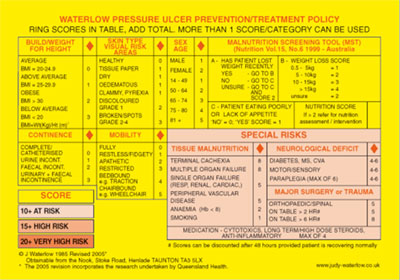
Pressure ulcer risk assessment
The Waterlow Scorecard is a validated tool for carrying out a risk assessment and should be used with clinical judgement. More can be found on the Judy Waterlow website.
Once you have assessed the resident or patient, you can then identify which pressure care mattress will best support their needs. Below is an outline of the different types of pressure care mattresses and the situations in which they are most appropriate.
Different Types of Pressure Care Mattresses
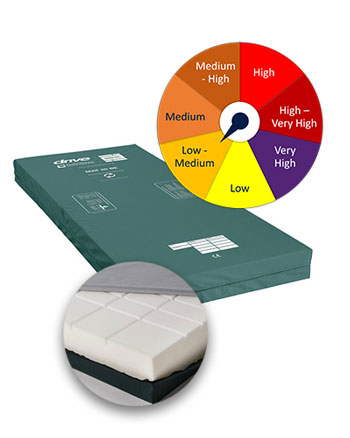
Foam Mattress or Static Mattress
- Reduce pressure across the support surface of the mattress through pressure redistribution.
- Offers reactive therapy by constantly applying pressure to the skin and underlying tissues.
- Modular or castellated foam cubes react independently to each other, conforming to the resident’s body.
- Pressure is relieved when the resident moves either independently or through manual repositioning.
- Come with breathable protective covers to minimise sweat and moisture
- Shear and friction may also be reduced with this type of surface
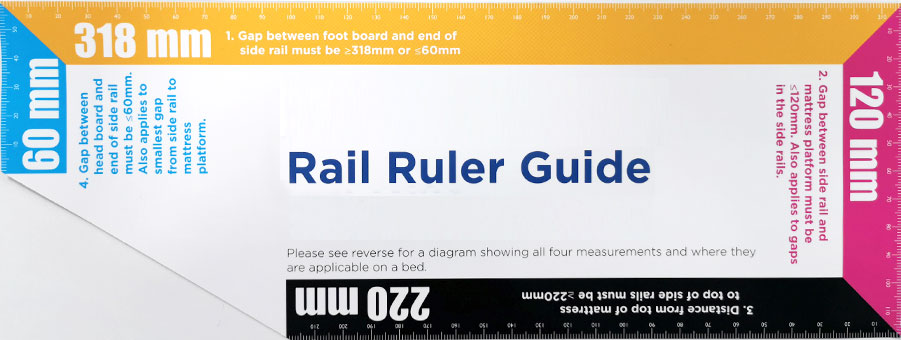
- Designed to work with profiling beds (See Side Rail Regulations below)
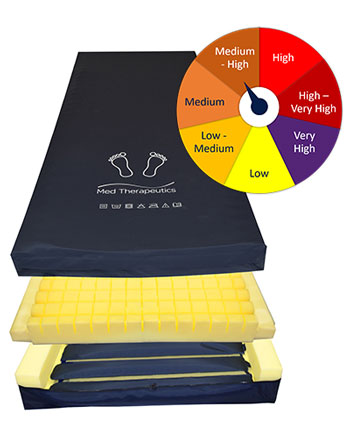
Risk Level – Foam mattresses are generally used for lower-risk residents with a degree of independent mobility.
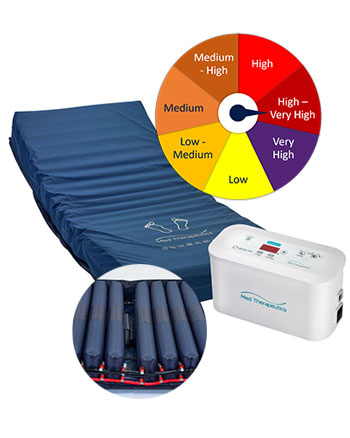
Air Mattress or Alternative /Dynamic Mattress
- Designed with pockets or cells of air.
- Powered through an electrical pump that alternates the air in different cells.
- The pump works through various cycles, offering pressure relief and tissue offloading through active therapy.
- Inflated cells provide pressure to support the user whilst deflated cells provide relief for the user’s skin
- Designed to work with profiling beds (See Side Rail Regulations below)
Risk Level – Air mattresses are designed for residents at higher risk of pressure ulcers or those with existing pressure ulcers. Widely used for resident’s who are unable to move by themselves.
Hybrid Mattress
- Hybrid mattresses combine both foam and air into one support surface.
- Widely used for those that might need varying levels of care or therapy.
- Provides pressure relief through the air cells whilst providing comfort and support through the foam layer.
- Requires a pump to alternate the air cells
- Designed to work with profiling beds (See Side Rail Regulations below)
Risk Level – Hybrid mattresses are used for residents with varying levels of pressure ulcer risk.